Practitioner training for high-stakes clinical work
Practice-led training for behaviour support practitioners and allied health teams
In disability practice, training must support how practitioners think and respond in real situations.
Disability Counsel delivers practitioner training and PBS training workshops that strengthen clinical reasoning, ethical judgement, and decision-making where risk, rights, and responsibility intersect.
This is professional development for the disability sector, designed to be clinically rigorous and practically accessible, informed by more than three decades of practice in complex disability contexts.

Practitioner training for high-stakes clinical work
Practice-led training for behaviour support practitioners and allied health teams
In disability practice, training must support how practitioners think and respond in real situations.
Disability Counsel delivers NDIS practitioner training and PBS training workshops that strengthen clinical reasoning, ethical judgement, and decision-making where risk, rights, and responsibility intersect.
This is professional development for the disability sector, designed to be clinically rigorous and practically accessible, informed by more than three decades of practice in complex disability contexts.
Workshops

The Practitioner Lab™ – Adaptive PBS Practice
June 2026
A 6 week ‘Study Hall’ for Behaviour Support professionals committed to clinical excellence and contemporary practice leadership.
The Practitioner Lab™ – Integration and Application
July 2026
A 6 week ‘Study Hall’ for Behaviour Support Professionals: where clinical excellence meets strategic practice development.

The Practice Navigator™ : Navigate. Execute. Deliver.
September 2026
A 6 week intensive for Behaviour Support professionals committed to clinical excellence and contemporary practice leadership in the context of implementation of Positive Behaviour Support services.
The Practitioner Lab™ – Adaptive PBS Practice
June 2026
A 6 week ‘Study Hall’ for Behaviour Support professionals committed to clinical excellence and contemporary practice leadership.
The Practitioner Lab™ – Integration and Application
July 2026
A 6 week ‘Study Hall’ for Behaviour Support Professionals: where clinical excellence meets strategic practice development.
The Practice Navigator™ : Navigate. Execute. Deliver.
September 2026
A 6 week intensive for Behaviour Support professionals committed to clinical excellence and contemporary practice leadership in the context of implementation of Positive Behaviour Support services.
What NDIS practitioner training should strengthen
Clinical reasoning
Clear thinking in high-risk, multi-factor practice environments
Ethical judgement
Decision-making where there are no prescriptive answers
Proportionate response
Defensible approaches to risk and restrictive practices
Human rights in practice
Active application in everyday clinical decisions
Shared language
Consistent reasoning across teams and services
Who this training is for in the disability sector
This clinical training for the disability sector is suited to settings where practitioners hold responsibility for decisions that must be ethically sound and able to withstand scrutiny.
It is relevant for:
-
- Behaviour support practitioner training needs within complex NDIS environments
- Allied health professionals navigating risk, restrictive practices, and dual diagnosis
- Practitioner teams seeking a shared approach to clinical reasoning and judgement
- Services aiming to strengthen consistency without reducing professional autonomy

Clinical focus areas for behaviour support practitioner training
This behaviour support practitioner training is designed for practitioners working in complex NDIS contexts, where decisions must be ethical, proportionate, and defensible.
Focus areas include:
-
- Human rights–based practice in disability, applied in everyday clinical decisions
- Proportionate intervention, including risk, restrictive practices, and ethical boundaries
- Translating NDIS frameworks and policy into defensible clinical practice
- Holding complexity where needed, clarity where possible
How training and workshops are delivered
NDIS practitioner training is delivered through interactive workshops, offered as standalone sessions or integrated into supervision relationships where appropriate.
Sessions are structured to prioritise:
Applied reasoning
Reflection, discussion, and decision-making grounded in practice
Practitioner expertise
Engagement that respects experience rather than assuming knowledge gaps
Context sensitivity
Responsiveness to participant roles, settings, and professional responsibilities
Structured flexibility
Clear focus alongside space for emerging issues
Each engagement is defined carefully to ensure relevance, depth, and appropriate boundaries.
Where appropriate, sessions can also be adapted for online delivery (for example, NDIS training online formats for distributed teams).
Clinical standards beyond baseline frameworks
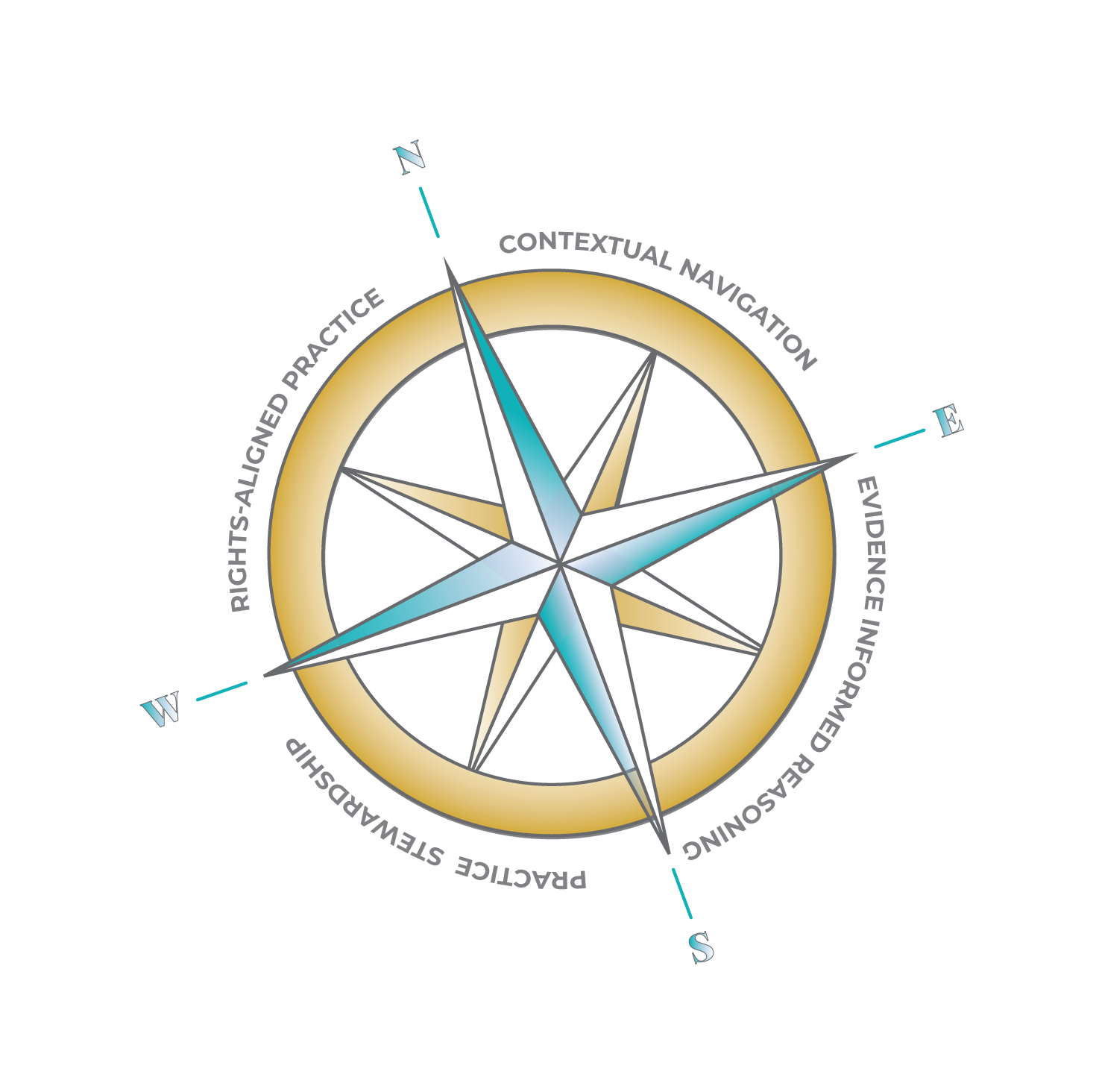
This training is guided by a clearly defined standard of clinical practice developed through sustained work in complex disability and behaviour support settings.
Alignment with evidence-based practice frameworks and accreditation standards follows from disciplined clinical reasoning, ethical judgement, and proportionate decision-making, rather than being the primary aim of the training.
The work draws on:
-
- Human rights-based practice as applied in everyday clinical decisions
- The social model of disability, with attention to environmental and systemic factors
- Evidence-informed approaches that remain clinically rigorous and practically accessible
The emphasis remains on the quality of reasoning required in practice, particularly where decisions carry consequences.

Discuss training courses or group supervision training
If you are considering training courses, individual and/or group supervision, or targeted workshops for your team, we welcome you to enquire directly with us.
An initial conversation allows space to understand your context, clarify priorities, and determine whether this training approach aligns with your needs.